
Contact Us
Contact Us
Reef Fishing off Key Biscayne
Target reef species and seasonal pelagics on the Atlantic-side reefs off Key Biscayne, with Fowey Rocks Light as an iconic landmark. Pick a good weather window, plan your drift, and fish the edges responsibly.
Reef fishing off Key Biscayne is one of South Florida’s most reliable offshore adventures—close enough for a half-day run, but “real” Atlantic water with current, structure, and changing conditions. The headline spot is Fowey Rocks, where shallow coral habitat and nearby ledges create a natural funnel for bait and game fish.
Most boaters stage from the Key Biscayne corridor (Bill Baggs Cape Florida State Park / No Name Harbor area) and run out to the ocean side when seas allow. Because regulations can vary by zone (state, federal, and areas near Biscayne National Park), it’s smart to confirm seasons, sizes, and any special rules before you drop a line.
Plan for daylight, monitor wind and current, and use electronics for precise positioning—then focus on clean drifts, careful anchoring, and reef-friendly practices to keep this fishery healthy.
About This Experience
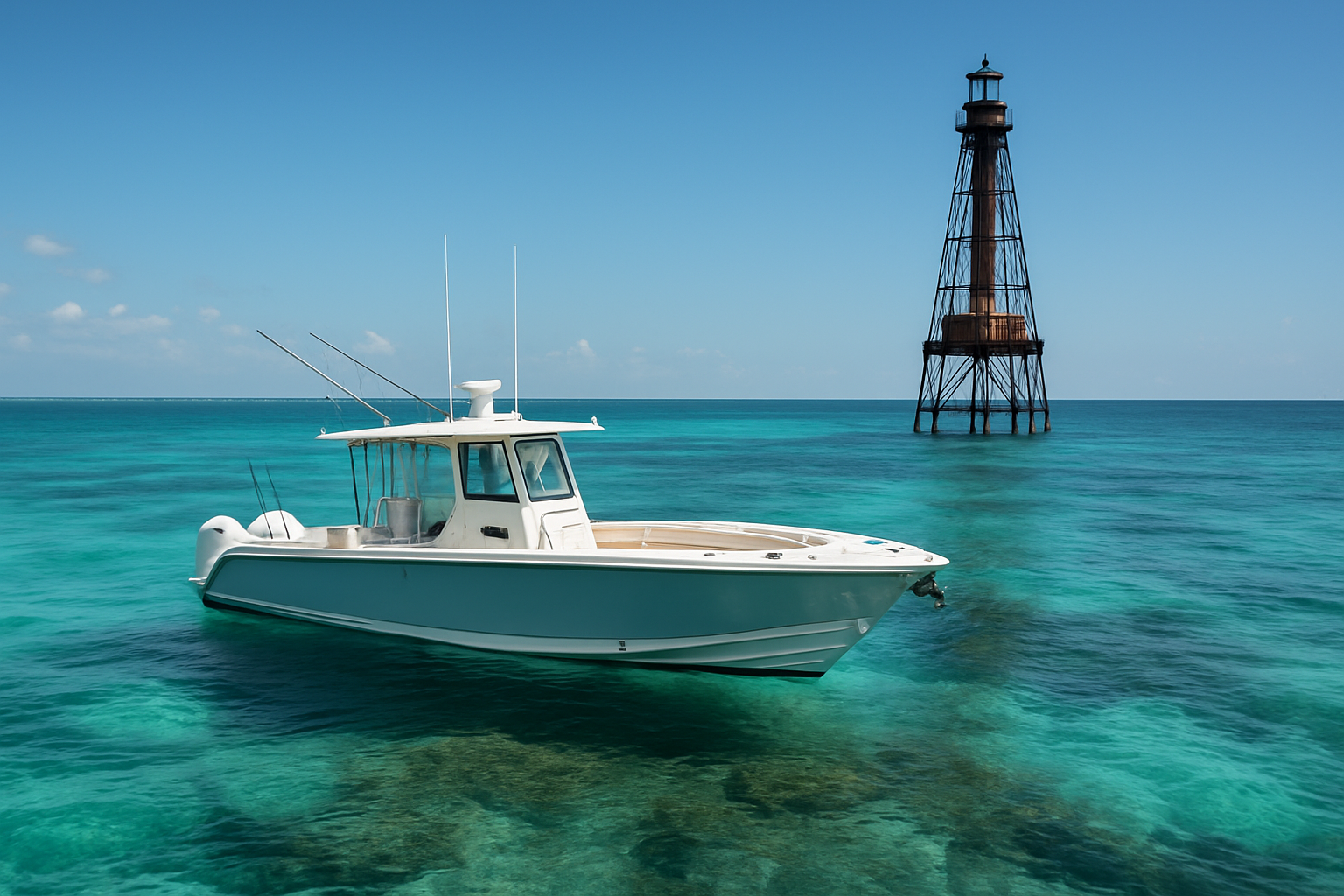
Fowey Rocks / Fowey Rocks Light is a primary reef-fishing zone off Cape Florida with a recognizable offshore lighthouse (completed 1878, automated in 1975) sitting on/near shallow coral structure. The area is valued because it blends shallow reef habitat with nearby deeper edges—conditions that can stack bait and attract reef species, and at times pelagic fish cruising the drop.
This is open water with no posted “hours,” so the best time to go is whenever sea state and visibility are safe. Expect Gulf Stream-influenced current changes that affect both your drift speed and how you set up on the reef.
Suggested boat routes (from Key Biscayne)
Bill Baggs / Cape Florida → Fowey Rocks Light (direct run)
Stage near Cape Florida, then run out to the ocean side toward Fowey Rocks Light. Use a waypoint and keep a sharp watch on wind-against-current chop. Set up a controlled drift along the reef/edge rather than powering over shallow structure.
No Name Harbor → Fowey Rocks → return to No Name Harbor
Ideal for an early start: prep in protected water, run offshore for a morning bite, then come back inside to reset, grab food, and wait out afternoon seabreeze if needed.
Fowey Rocks → additional county reef/buoy areas (as a secondary stop)
If conditions and fishing warrant, expand to other reef-style destinations supported by Miami-Dade’s reef/mooring buoy program. Maintain reef etiquette and verify the exact site rules before tying in or anchoring.
Perfect Boats for This Activity

Giuli at Key Biscayne

Giselle at Key Biscayne

Robalo Crandon

Donzi Dream

Balboa at Key Biscayne

Shining Force at Key Biscayne

Molto Piaciuto at Key Biscayne

Bubble at Key Biscayne

Le Grand Bleu at Key Biscayne

Giselle at Coral Gables

Blue 24

Pelican IV
Giuli at Key Biscayne
Giselle at Key Biscayne
Robalo Crandon
Donzi Dream
Balboa at Key Biscayne
Shining Force at Key Biscayne
Molto Piaciuto at Key Biscayne
Bubble at Key Biscayne
Le Grand Bleu at Key Biscayne
Giselle at Coral Gables
Blue 24
Pelican IV
Where This Activity Takes Place
Getting There
Multiple departure points available
Open in Maps
On-the-water tips for reef fishing here
Check the marine forecast, wind direction, and any wind-against-current conditions before committing to the offshore run.
Use your chartplotter/sonar to avoid coral contact and to line up drifts along the edge rather than across shallow reef.
Plan your approach for current: set drifts up-current and give yourself room to reset without crowding other boats.
Avoid dragging anchors on coral. If you must anchor, do it in sand and confirm you’re not impacting reef habitat.
Bring polarized sunglasses, plenty of water, reef-safe sunscreen, and sea-sickness meds if anyone is prone.
Confirm regulations for where you’re fishing (state vs federal waters and any Biscayne National Park-specific rules and species protections).
Best time to go
Aim for daylight hours with a conservative sea-state forecast. Early mornings are often calmer, and conditions can change quickly when the afternoon seabreeze builds. Current strength varies—be ready to adjust drift tactics, weight, and bait presentation.

Do it with BoatPass
BoatPass makes it easy to plan a reef-fishing day off Key Biscayne without the hassles of ownership. Membership covers captain, fuel, and docking on all trips, and you can book through the app, website, or concierge.
Frequently Asked Questions
A classic starting point is Fowey Rocks near Fowey Rocks Light (25.590283, -80.096667). It’s a well-known landmark area with shallow reef structure and nearby edges that can hold fish depending on season and current.
It’s an offshore Atlantic run from the Cape Florida/Key Biscayne area. Exact distance and run time depend on your departure point, boat speed, and sea state—plan conservatively and prioritize a safe weather window.
Bill Baggs Cape Florida State Park (1200 S. Crandon Blvd., Key Biscayne, FL 33149; 786-582-2673) is a common staging reference for boaters heading to the ocean-side reefs. The park is open 8 a.m. to sundown and can close when capacity is reached on busy days.
Catch opportunities vary by season and conditions, but anglers commonly target reef species along structure and may see pelagic action along the deeper edge. Match your tackle and technique (live bait, drifting, jigging) to depth/current and always follow current regulations.
Yes—rules can vary by location, and Biscayne National Park has additional protections and park-specific regulations (including species protections and certain size rules). Verify current FWC and NPS guidance for the exact area you plan to fish before your trip.
No Name Harbor inside Bill Baggs is a popular protected stop before or after an offshore run. You can also pair your day with a visit to the historic Cape Florida Lighthouse within the park, conditions and timing permitting.
Start your boating journey today
Book a Reef Fishing TripReady to experience Reef Fishing off Key Biscayne?
Book a Reef Fishing Trip